Hiring a Shopify Developer? What to Prepare
How to hire Shopify developer help the calm way: product sheet, assets, access, decisions and test list so your bridal build starts fast and stays clear.
 Selim Abdulsalam September 2026 7 MIN READ
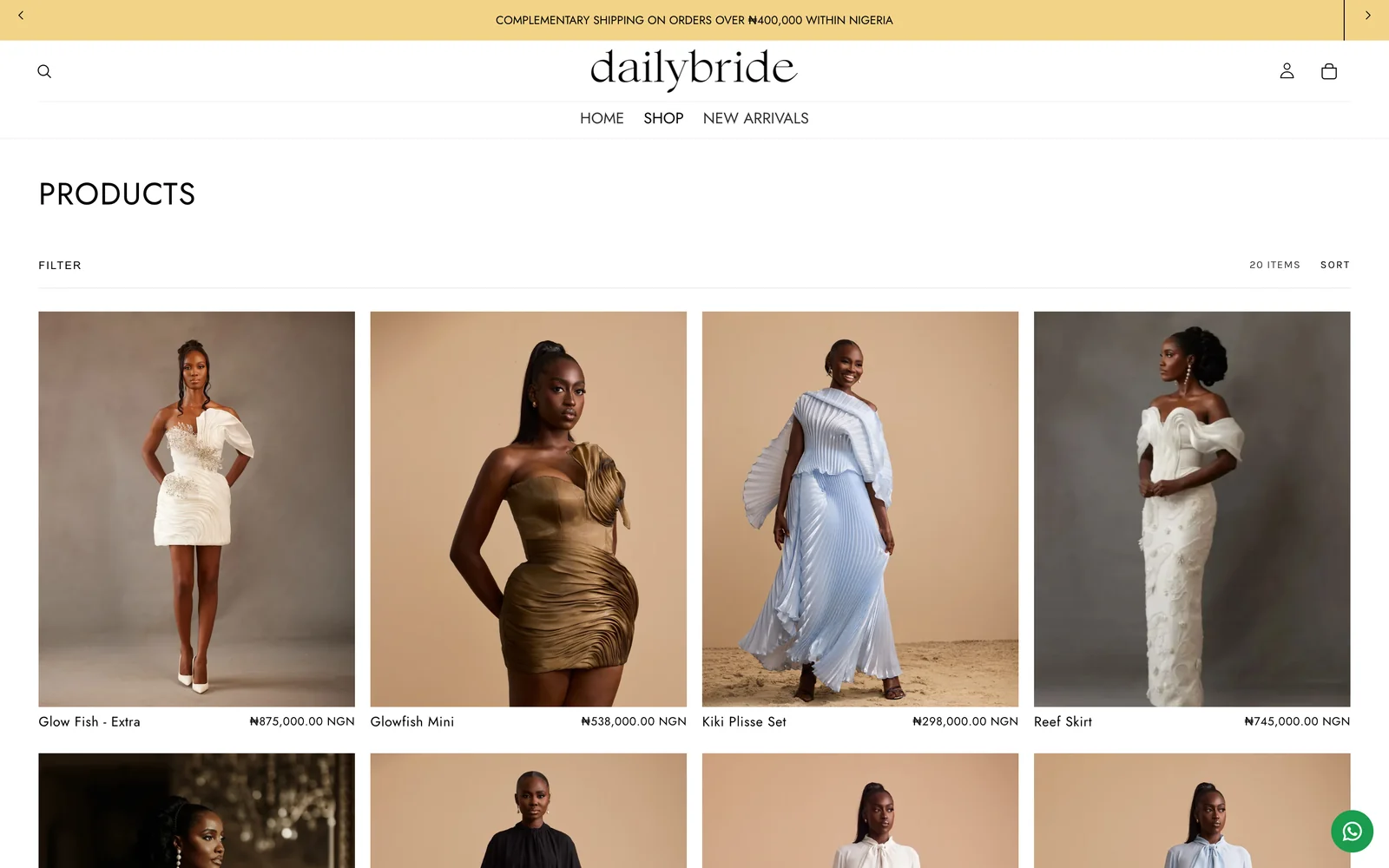
To hire Shopify developer help that starts fast, prepare a simple product sheet, your images and copy, domain and access details, a short decision list, and a test script for launch week. I watched this prep cut weeks of back-and-forth on a fast bridal conversion build that split a standalone store from an earlier category lineup. You do not need to sound technical. You need to be readable.
The bridal build in this story involved occasion collections named Celebrations and Special Occasions, a Bridal Collection block, SHOP THE LOOK, DISCOVER OUR STORY, bestsellers, Instagram tiles, newsletter signup, and a footer with Size Guide, Shipping and Delivery, Refunds, Privacy, Booking Policy, Orders and Profile, plus About, Contact, FAQs, and Book Consultation. Product pages plus variants were the hardest part, with fabric and care notes, a help message, and a shipping policy link on each product. Domain connection, general shipping setup, two unnamed markets, analytics with Search Console, small scrollbar styling, and cart checks rounded out the coverage. I mention this detail so you can picture the moving pieces, not so you can copy them blindly. Your prep should describe your pieces with the same plain honesty.
Bring a product sheet developers can actually use
A useful product sheet is vague about internals and specific about shopper-facing facts. List each style, its options for size and material, which combinations carry different prices, image order, fabric and care notes, and a done column. Leave out sourcing detail, internal costs, timelines, and anything you would not want forwarded. This sheet becomes the shared language for variants, galleries, and testing, and it prevents the familiar mess where a size exists in one material but not another. My variants with different prices guide shows the grid thinking behind a clean sheet, and it pairs well with this hiring prep.
Include examples of tricky pieces early. If one style has unusual materials, if sizing runs differently across pieces, or if certain combinations should not be sold, say so on day one with links to the exact products. Developers cannot rescue information they never received, and kind clients share the awkward items first. One clear sheet with honest flags beats ten polite calls where everyone discovers the same surprise together.
A small dry truth: the sheet you think is rough is usually enough, while the perfect sheet you keep polishing delays the build. Share the rough one, label it draft, and improve it in the open.
Gather assets, access, and decisions in one place
Assets mean the files and words shoppers will see: product images in consistent order, collection imagery, hero imagery, logo files, copy for story and policy pages, and links to your Instagram and signup touchpoints. Name files plainly and group them by style or section so nobody guesses. Access means the logins and permissions your builder needs to do the job: domain registrar, email aid, analytics, and store access with the least privilege that still allows progress. Shopify documents the surrounding mechanics in its guide to connecting a third-party domain and its guide to third-party checkout providers, which help you understand what access allows without oversharing credentials. Share access securely, revoke what is no longer needed, and keep a dated note of who holds what.
Decisions deserve their own short list, apart from assets. Record your domain choice, market count with names kept private, shipping coverage in general terms, return and booking rules, and who approves copy changes. Short decision notes prevent long message threads where three people remember different outcomes. When a decision changes, update the note with the date rather than burying the change in chat history.
My new store launch checklist shows how these assets and decisions line up from domain to announce, so you can see where your prep fits. Builders love owners who arrive with files named, access ready, and decisions written down. It reads as respect, because it is.
Agree how you will test and launch together
Testing agreements prevent launch-week strain. Before work starts, agree who tests what, on which devices, and what done means for each area: domain and markets, checkout path, shipping coverage versus the Shipping and Delivery page, every variant combination, story and trust blocks, Search and cart behavior, plus newsletter and analytics collection. Name one approver for copy and one for catalog facts so feedback arrives once, clearly, instead of three times contradictorily. You can see the areas worth covering in my selected storefront work, which follows the same story-to-proof-to-signup rhythm across stores.
Keep communication boring in the best way. One thread for decisions, one place for files, and a weekly short note with what is done, what is next, and what is blocked. Avoid scattering approvals across calls, chats, and comments where they cannot be found later. Calm builds are rarely charismatic behind the scenes. They are legible, and legibility compounds.
Set a launch window rather than a launch moment. Confirm the store reads well on mobile data, collection grids load cleanly with Search and cart controls visible, product galleries match their options, and footer links open correctly. Then announce to a small group first, watch orders and messages, and widen the circle once the first real purchases flow cleanly.
Hire Shopify developer prep checklist you can copy
Use this hire Shopify developer prep list to brief clearly without overexposing internals.
- Product sheet. Styles, options, which combinations differ, image order, fabric and care notes, done column, tricky items flagged on day one.
- Assets. Product and collection imagery, hero files, logo, story and policy copy, social and signup links, all plainly named and grouped.
- Access. Domain, email aid, analytics, and store permissions shared securely with least privilege, plus a dated note of who holds what.
- Decisions. Domain choice, market count kept private, shipping coverage in general terms, return and booking rules, named approvers.
- Test script. Domain, markets, checkout, shipping page match, variant matrix, story blocks, Search, cart drawer, signup, and analytics collection.
- Launch order. Small-group announce first, watch orders and messages, then widen, with one owner assigned to day-one responses.
Freelancer or agency for a bridal store build?
Either can work when the prep is clear and the catalog is honest. A solo builder often suits a focused conversion build with a tight style count, direct owner feedback, and a short decision chain. A larger team often suits parallel coverage needs, such as catalog, copy, and imagery moving at once with layered approvals. Judge by responsiveness, relevant storefront examples, and how they talk about variants and mobile behavior, not by headcount alone. Ask how they would handle a size that exists in one material but not another, and listen for grid thinking rather than vague reassurance.
What access should I share, and what should I hold back?
Share what the work requires and nothing more. Store access with appropriate permissions, domain connection ability during the connection window, and limited seats in supporting aids are usually enough to progress. Hold back root credentials, unrelated accounts, and any document containing private timelines, addresses, or internal figures. Rotate shared secrets when the engagement ends and confirm access removal in writing. Generosity with clarity and restraint with credentials is the combination that keeps both sides comfortable.
If you are gathering these pieces now, get in touch with your style count, asset status, and hoped launch window, and we will turn the pile into a build.